When we set out to make our first full-length album as Maraj, we had one simple goal: start and don’t stop until it’s done. We are a new band with a lot of internal momentum, and a strong, but loose process: I write the music, Ben makes it better, Kam and Darius rap, and Sam sings the hooks. From the onset, we’ve had a natural sense of unity and liberty; a feeling that arose out of our diversity, drive to create, and primary focus on the groove. The following three months turned into the most prolific, focused, and fun period I’ve ever had as a producer and collaborator.
On our first EP, I wrote all of the music as I had in the past for other projects; I sat at the guitar or piano, wrote chords and melodies, then started arranging and overdubbing until it was time to write hooks and lyrics. I am devoted to creating a mix of organic and electronic instrumentation, respecting the feel and necessity of human time and error, but not denying the power of drum machines and precise “in the box” synthesizers. While I’m proud of the funk and hooks on the EP and the opportunity it gave us to become a unit, it lacked the multi-dimensional aesthetic that is a hallmark of my favorite producers from Madlib to Van Dyke Parks.
As I was working at Hillside Middle School this past spring, teaching kids about vinyl for the Gift of Music program, it became clear that the root of our next album would be my collection of world and novelty records I’ve collected over the years. When I compose on an instrument, as opposed to staff paper, midi, or a DAW, I often find my compositional choices are based on my physical habits as a player rather than exploration of and reflection upon the infinite possibilities of any musical moment. I made it a goal to make the melodic and chord structures based on samples, and to use performance to sweeten and enhance the framework created by the vinyl samples. I would take the role of translator as opposed to author. As weeks and months went by, I came to find that I was freer than ever to shape my musical aesthetic, and began to access grooves and sounds that I long attempted, but fell short of due to my limitations as an instrumentalist.
Those of you who sample know that the more you look, the more the connections start to reveal themselves, no matter how disparate the source material may be. The first beat I created for the album, “Two Trips”, features samples from Faust, Scott Joplin, Sons of Pioneers, and a Martin Denny exotica record. I can barely remember how it all came to be, but through intense focus and the action/reaction process of composing in the studio, everything fell into place. I took the half finished record to the Double Phelix and added pianos, guitars, Hammond organ, percussion, and Ben sweetened the vinyl drum breaks with a Roland 707. Often times, this process includes our incredible bass player, Joel Pixley-Fink, cutting funky live bass. Between April and July 2014, we went on to create about 15 more tracks along the same lines, ten of which have made it onto the final release.
All the while, as the beats became more complete, I was passing demos to Kam, Darius, and Sam to write hooks and lyrics. While I am a vocalist and contribute to most tracks, I amazed by the power of great vocalists and MCs to turn sound into concept and concept into content. When I hear a track, I hear microphones, instruments, chords, and grooves, while Kam and Darius are able to fluidly translate sounds into visions; a multi-tracked add 6 chord of Sam’s voice may be the rainforest, while a roomy piano trill may be the disillusion of a lover. From there we take an image, and we grow a concept; a rainforest feels free, freedom takes liberation, and we’re off. However broad a concept like ‘freedom’ or ‘time’ may be, the details and meaning of a Maraj song become clearer and more concrete as the voices enumerate.
Just as the disparate samples come together through an unspoken action/reaction, each vocalist found their place in the music, and helped form the concept by adding their unique perspective. The more we searched, the more options were revealed. Within in this framework, we were not only able to push our collaboration conceptually, but also play with our given roles as musicians and people. Our live vocalist turned full time member, Toro, started to spit verses, while Darius and Kam wrote more hooks.
This is not to say we got it all figured out or that we don’t have room to grow; the voyage of a musician is never ending. We certainly aren’t the first or the last to create in this style; we’re always connected to those who came before. While we’d like to sell some CDs and have people come to our shows, for us the inspiration and the payoff is in the process itself. Maraj wasn’t planned, it just happened. As we say on the title track, “Who do you trust, when the road just rolls out behind us?”
In a world that continuously grows more fragmented and polarized through absurdist media, technological dependency, institutionalized racism, and apathetic cool, music offers us a breeding ground for self-definition and universal understanding. Music is the language of the soul. We are overjoyed to have found each other at such a ripe time and hope our music can help spark new avenues of exploration and connection for others to build off of. Our ears are tired from months of post-production, but our minds are our racing, and this album leaves us with so much room to grow and discover as long as we continue to be ourselves, together, in the studio, having fun.
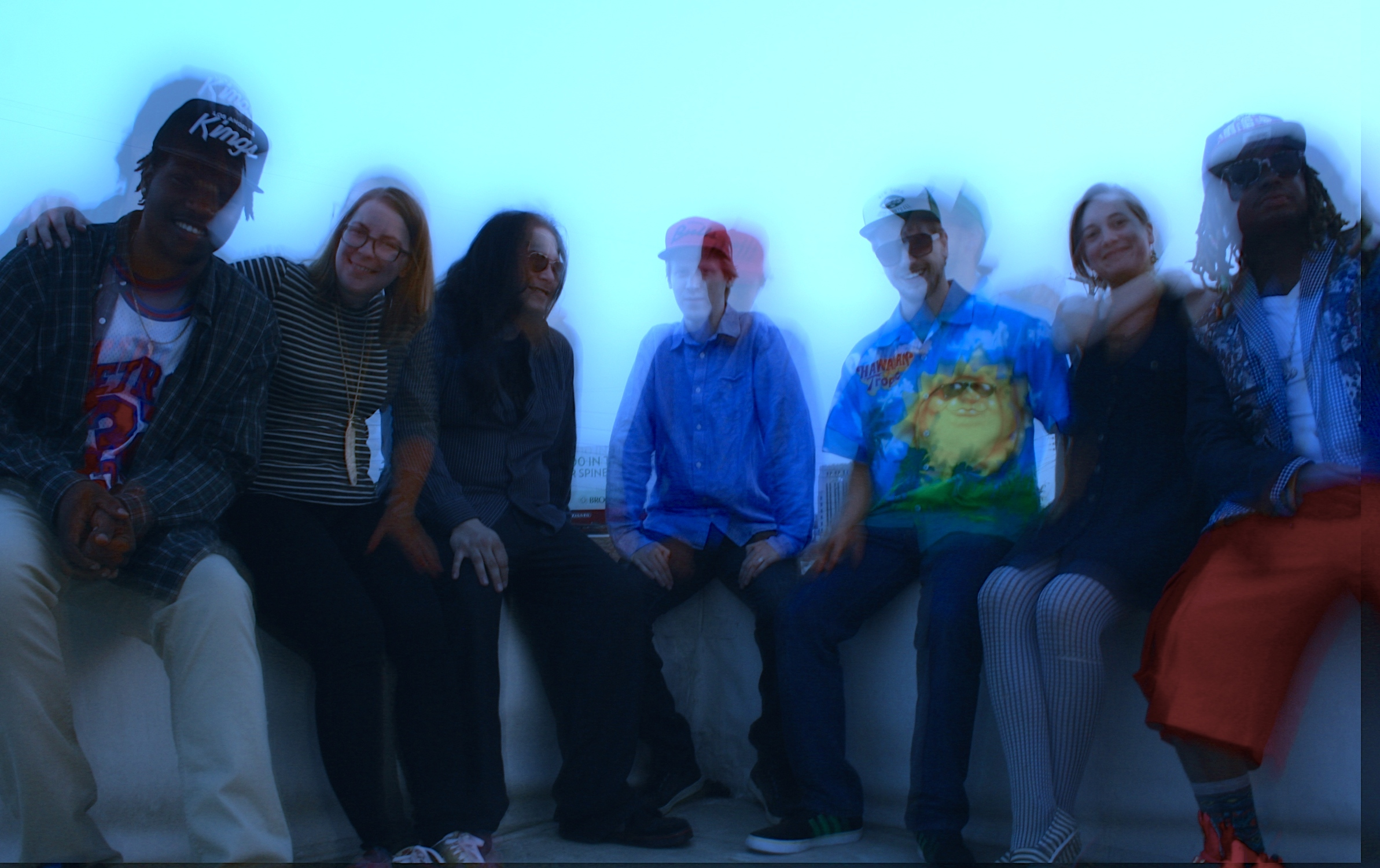
Maraj is: Andy Catlin, Ben Lau, Kameron Potts, Sam Cooper, Darius Greer, Julia Toro, and Joel Pixley-Fink.
VOYAGER is out today on CD and digital download through
Maraj plays for free tonight, Sept. 12, at Louie’s Trophy House in Kalamazoo, MI. The show is free, 18+, and begins at 930pm. Fellow Michigan voyagers Ty Beat and MC Friendly support, with DJ Surge spinning throughout the night.
 DITKalamazoo