Category Archives: Album Reviews

If you like them, then you’ll -love- these guys!

Problems That Fix Themselves release their new album today!

which is worse

By Peter Cook for Already Dead Tapes.

Problems That Fix Themselves’ third proper album, Which Is Worse, will wrap the head of any listener in swaddling blankets. The majority of the seven pieces which comprise this latest offering from the Chicago duo (long-time contributor Alex Borozan is now officially the other half of founder Josh Tabbia’s electronic vision) display a marked emphasis on melody and structure, with only the closing track, “Slowburn,” containing the free-form assault on the senses with which Problems have pummeled audiences throughout the Midwest the past few years.

The sound bite sampling and mechanized beats that propelled the magnificent assortment of sounds on their last release, 2010’s Seconds, have all but vanished in favor of melodic passages which move as naturally as the river flows.  Seconds was far from cold and clamorous, abundant in warmth and melody, but much of it was buried under shards of experimentation that appeared to be taking place while the tape was rolling. That is the key difference on Which Is Worse: the experimentation seems to have taken place largely in the composing process, with the textural sounds arranged into the colorful, radiating pieces, giving the album a more refined sound, while still exciting and bold nonetheless.

The titular cut acts as the opening credits, with a Baldwin Discoverer table top organ cycling through a series of sustained chords against a gentle wash of white noise thunderstorm. “Maximum Occupancy” crawls across the speakers through a wormhole into “Black Elvis,” which explodes in a majestic myriad of incandescent phosphorescence, in shades of Tangerine Dream and Harmonia. The production is stunningly crisp, with a cohesion unprecedented in Problems’ catalogue. The sole vocal performance on the album appears on “Sunday Song,” a tender tune which unites contributing member Victoria Blade’s saccharine, distorted vocals with a melodious synth line, bringing side one to a sweet-tempered close.

Side two opener “8:62” features the drill and bass drum patterns often employed by Aphex Twin and Squarepusher back in the day. A diced-up air organ supplies the main melody while cherubic flourishes distantly circle overhead. “Elsie Mary” paints a serene, understated landscape that is not unlike those explored by early pioneering electronic artists in Europe that Brian Eno sought out. The aforementioned “Slowburn” finishes off the album in an abrasive, terrifying menace of sonance that is absent from the six tracks which precede it.

Perhaps the only perceivable shortcoming of Which Is Worse is the brevity of the album, clocking in at around 35 minutes. Maybe Problems ascribe to the old vaudevillian adage, “Always leave them wanting more.” Regardless, with not a wasted note to be found, the album is comforting sonic bliss that benefits from repeated listens and can be done so ad infinitum at such a short running time. Chalk up another one for Problems That Fix Themselves.

Below is a link to their Bandcamp with the album available to stream and purchase.

Which Is Worse

Clever Titles Can Go To Hell: Coma Nova’s “The Hazard Album”

Hazard the Cat (by Lauren W.)

With their third full length album in under a year, Coma Nova’s “The Hazard Album,” released July 17th, shows what might happen when artistic apathy takes control an album.

Before allowing that foreboding sentence to seize your eardrums, listeners and fans shouldn’t question the quality of the album—even if it requires a wary listen. Bouncing around between the genres of grunge, metal, surf-rock, classic-punk, and rap, the trio has produced their most eclectic (and lengthy, coming in at a healthy twenty songs) record to date.

That length provides plenty of listening enjoyment for those that are already familiar with the gritty, alt-grunge, fuck-you sound of Coma Nova,. While no-longer the four piece group with female lead that graced the cover of West Michigan Noise as of last year, the core trio of friends –Eli Kroes, Jake Marcus, and Matt Motzell (after a hiccup with another, now self-exiled drummer, who appears as The Professor on the album)–still remains.

The album wavers between 90’s grunge experimentalism and angered-rap apathy.  It starts off with a sludgy beat song “The Boggart” that straddles some wobbly line between metal and grunge. However, “The Boggart” does little to set the tone of the album. Sitting on a sound of garbling dark-matter, Coma Nova dissolves the volcanic guitar tracks in favor of a punk-rock anthem on the next track, “Nightmare Generator,” along to the frantically repeated lyrics “it’s alright.”

The genre-hopping occurs in bursts during the first half of the album, favoring punk trips during “Nightmare Generator” and “Showbiz,” followed by grunge-metal hybridizations like “Chains” and “Nazi Sympathizer.” While the diversion from a single focused genre can be distracting, it doesn’t feel forced; rather the band feels comfortable performing and experimenting within these genres that have built off of each other—taking a lick from here, rocking a graveling voice there, Coma Nova manages to make genre abandon a-ok.

But where abandon and absence of self-definition aid the band in the first eight songs of the album, a shift into rap—specifically of the “hate” variety, brings a questionable tone to the album. After a series of grunge tunes(or somewhere in the vicinity of the genre), listeners are smacked with the bands’ rap caricatures/alter-egos Sharks/The HATE Noise (Eli), Mean Gene (Jake), Anonymous (Matt) so much so that it feels  like a completely separate album.

In an interview, Eli ascribed the shift in gears, during both the first and second halves of the album, to boredom and apathy. “Once we’re done with one project, we’re sick of listening to all these songs we just worked on. We want to make something else at that point.”

Collaborating with other local artists The Wrap, DJ Gami, Dankstarr, and The Professor, Coma Nova creates a hip-hop narrative of gun-toting violence, physical abuse, white-trash, and homophobia.

Set to a catchy, upbeat, guitar riff, during “I Get Mad” Sharks slings rhymes about dealing cocaine and meth (nobody’s cocaine is whiter/ I bring mine across the border), drinking and fighting cops (last time I did some shots/ I got grilled by fifteen cops) all along to the chorus “I get mad, I get mad/ oh I get mad, gonna whoop that ass just like your dad.”

Most of the songs are provocative, past the point of braggadocio (when rappers rap about how great they are and how much other rappers/ individuals suck in comparison, specifically through rhyming). The last song of the album “Has Been For Years” features Sharks and Mean Gene claiming credit for blowing up the Twin Towers right alongside “gotta love fairies/ or not/ fuck that, fuck J.K. Rowling/ yo faggot, your boyfriend’s calling,” all set to Frankie Valie’s “Walk Like A Man.” Much of it seems to be Coma Nova just wanting a rise out of the listeners, Eli himself claiming that “some shit just seemed funny.”

Others are crude, such as “Future On The Road,” a song about truckers having gay-sex, along with a few chilled-out rap songs about smoking weed, like “Herb.” All of it is catchy, and well mixed—both DJ Gami and Eli are obviously talented producers, Eli handling all the in-studio production with Gami on all the live tracks, and they keep things crisp, almost allowing the polished rhymes to pass through without  hindrance.

However, for as catchy and well put-together as it is, its tone and content’s disregard for sensitive subjects will alienate many listeners. In an interview lead guitar and vocalist Eli described their intentions as “wanting to make fun of the things around us growing up: homophobic white-trash that shoot-off guns in the woods,” (as most evidently shown in the track “Fully Automatic Gun Addict”) and bassist Jake asserted that they “never wanting to offend anyone,” (a statement not as easily certified).  The message just doesn’t come across clearly on the first listen, and requires a few, heaping, handfuls of salt to get through without a resounding “fuck you” to the band—despite quality production, practiced experimentation, and a healthy confidence from the band itself.

Album Review: UUNO’s “This Is You At Your Best”

First some context. This Is You At Your Best is a personal project by Christopher Wahamaki, who is the literary brainchild behind the album. Writing all the vocals and music for the album’s nine songs (aside from the music of “Focal Point,” which was written by Sophia Boudeliou) over over the course of 19 credit hours (he was still in school while creating it), Wahamaki believed he ended up with a psychedelic-folk album with his recording buddy David Bolema, who managed all the mixing, recording, and background instruments.
While a few acoustic tropes are thrown in for good measure– distant harmonica playing, sparse violin, and backing female vocals done by local brooding-femme artisan Fiona Dickinson, the album feels more like an alternative rock performance than an out-there psychedelic-folk concoction. The opening song “Homeward,” seems to have more in common with Joe Jackson’s Big World– an echoing, live, stadium performance where the audience was asked to hold the applause in between songs, then The Jefferson Airplane or The Grateful Dead.

This Is You At Your Best

Rather than focusing on psychedelic, stripped-down acoustic meddling or watery distorted grooves, listeners are introduced to an album that features amped-up, arena-style acoustic ditties.  Wahamaki’s songs feel more at place during drunken strolls through rain-slicked city streets dotted with neon signs than a fire-pit where everyone is tripping on mushshrooms. That being said the album is pay-what-you-want on bandcamp and thus cheaper than both of those activities, so I recommend dropping a buck for a solid, local, rock-album.

Album Review: Deep Waters

There are those days when all you feel like doing is sitting in a grassy field and watching the clouds travel across the sky.

Credit: Diamond Wave Press

They’re the days where you wish you can disappear from your schedule for a while, simply relax, and breathe.  If one could imagine a soundtrack to a rare day like that, it would be something like the self-titled album of David Spaliveri-Kruse’s (a.k.a. DSK’s) project Deep Waters.  This dream-pop, piano driven album provides a perfect opportunity for the listener to pause and reflect, even if grassy fields and sunshine are nowhere to be found.

The product of 2 years of his own hard work, DSK spent many an hour writing and recording the album, and it certainly shows throughout each of the songs.  One can tell each track is lovingly crafted with sincerity reminiscent of Iron & Wine.  The production value is not high by any means, and DSK’s vocals seem a little unsure at times, but it adds to the endearing quality of the album.  DSK asks his audience to sit with him for a while and join him in a reverie where tranquility reigns and memories roam.  My favorite song off of this album is definitely Pine Swayed Stories.  I think it perfectly encapsulates what I believe is this album’s strength: ethereal piano coupled with haunting vocals and lyrics that bring to mind the imagery of nature.  This album remains a solid offering from a solid local artist.

For fans of Lykke Li/Death Cab for Cutie/Glowfriends

The album can be found at Diamond Wave Press’ Store for free, but I highly suggest you buy the album if you want to support this musician’s art.

Already Dead Tapes 5th Release: FOOHGAWZ – Chapter 7

The 5th cassette release from Chicago-based Already Dead Tapes is Foohgawz “Chapter 7,” an experimental electronic recording that ventures all over the map in one continuous feed of audio.

Starting out the gate with an eerie wind tunnel of a drone, slowly creep in the electronic beats and rhythms that are present on and off throughout the duration of the program.  Cycling pulses and symphonic wails make frequent appearances, with what seems to be real guitar making the occasional pop-in. While essentially one piece of music, as there are no breaks, the mood is ever-shifting and does not get caught up in redundant electronic dub club ennui.

About a third of the way into the tape, out of nothing, a female voice enters the mix and suddenly we are cast into a Portishead-like trip hop piece for a few minutes, and just as quickly, right back into an electronic drone, never to revist anything remotely this song-
oriented again in the remainder of the tape, almost as if this were a cass-single for this pop song with bonus material wrapped on both sides, though not “filler” by any means.

I’m not certain if “Chapter 7” is a story, but it seems to end violently, with funeral bells, turbulent electronics, and what sounds like a car crash.  This is how side A concludes, and there is nothing to be found on side B.  This is a very singular and unique release, shrowded in mystery; the cassette itself is plain white, and aside from the artist name and title, the only other information found in the packaging is the address for Already Dead Tapes, rendering the average person clueless as to who, where or what is behind all of this.  A little bit of modern-day stalking (i.e. the internet) reveals that a man named Alex Meissner, a former Kalamazoo resident now in Orlando, Florida, is the sole force behind this project.  He has been playing around with this style since 1998.  Other recordings of his are available on his Soundcloud and this release can be ordered at Already Dead Tapes website.

Almanac Shouters WINDMILLS


Windmills, the second release from Kalamazoo’s The Almanac Shouters, displays that the trio firmly have their brand of folkpunk down.  The guitar/banjo/upright bass line-up can blaze when necessary, but more often, they are rooted in a slower Americana sound that is entirely congenial to the lyrics which largely deal with self-reflection and the next step in life (a lot of questions are asked in these songs).  There’s the occasional dip into more political matters; “N.R.A. (Neo-Radical Anarchists)” is the most rompin’ shaker found in the batch with an intense “Put down the gun!” chorus.

The male/female vocals are fittingly raw, with frontman and guitarist Alex Quinlan’s gritty lower register balanced by banjoist Nola Wiersma’s childlike upper.  She takes the lead vocal on “Thirteen,” an absolutely heartwarming nostalgia number. Bassist Rory Svekric can walk all over the fretboard, but has the instinct to keep space between the notes when needed.

The homemade production fits with the handcrafted quality of the band, as does the packaging (including a booklet containing ALL the lyrics).  The title track sounds as if it were recorded on a handheld cassette player, much like John Lennon’s “My Mummy’s Dead” but the song itself has more of a Tom Waits quality, maybe like the ancient-sounding 78 version of “Innocent When You Dream”.

There is a definite Johnny Cash influence evident in the songwriting.  In fact, the album closer, “So it goes…”, which chronicles the history of the Shouters, contains a chorus reminiscent of “Ring of Fire”. Throughout, there is a strong knowledge of older folk music present (hell, the band name is a reference to a project Woody Guthrie and Pete Seeger were involved in), but the Shouters don’t deny they are living in the modern age: “Will you grow old with me?/Child of the digital age/Or you can remain forever young/as zeros and ones/locked in a binary cage?”  It’s bizarre passages like that which add that extra bit of flavor and even brings to mind 1960s outsider musician Alexander “Skip” Spence, the “American Syd Barrett”, though things never get nearly that demented or removed. This is a strong set of modern folk tunes played by musicians with heart and enthusiasm.

Forget the Times ‘Escape From the Planet of Llamas’ Casette Review

What are we to do with noise-rock? I suppose ‘listen to it with an open mind’ is one option. Or you can write off the entire genre altogether. Hey, it’s your call!

Okay, maybe we all do it. Everyone is close-minded in some aspects, right? I don’t give that much of my attention to rap-rock. Then again, I probably wouldn’t take it upon myself to review a rap-rock album.

Let’s assume you’ve gone with option A and not completely closed the door on a vast catalog of music that goes back some fifty years or more. This brings us to the newest cassette release from the Kalamazoo/Chicago-based Already Dead Tapes.

What’s important to understand before you pop in “Escape From the Planet of Llamas” is that Forget the Times is a band attempting to turn music on its head, to take from elements of rock, psychedelic, free-jazz, noise, and other experimental forms in order to create something that sounds atypical. The songs this Kalamazoo band creates are largely improvisational, often only beginning with an agreed upon key. From there, it is up to the whims of the three guitarists, Peter Cook, Sean Hartman, and Benji Myers and drummer Jarad Selner what happens next. The four musically free-associate and play off each other for an undetermined period of time and then end when it feels natural.

This isn’t exactly revolutionary. Many, many artists over the years have decided to take this or a similar approach in creating their music. To say that you’ve heard nothing like this before would reveal an ignorance of a sub-genre even greater than that of myself, a relative novice in the world of noise and noise-rock – especially when compared with the progenitors of “Escape,” who certainly aren’t afraid to wear their influences proudly. Track four exemplifies this clearly as the title, ‘Fly V Gtr Made of Real Live Honking Geese,’ is a direct nod to experimental superhero Captain Beefheart and what he himself described as his biggest musical influence.

Making sonic connections like this is part of what makes listening to this tape fun for me. The opening track, ‘Early Morning Rabbit Hole,’ seems aptly titled with its frantic, alarm-like tones. Wonderful visuals can be concocted when listening to ‘Deinonychus Dreamland’ or ‘Here Comes the Wolfman,’ though none of this association is absolutely necessary to appreciate what’s going on here.

What is essential is to keep an open-mind. Forget the Times aren’t claiming to reinvent the wheel. But it’s interesting to hear where these individuals personally want to take music as members of the newest generation of noise-rock architects. Plus, you’ve got to appreciate the audacity of those willing to devote themselves to a relatively unpopular niche genre.

“Escape From the Planet of Llamas” comes in an attractive package to boot. I’ve got to hand it to the budding tape and record label for coming up with such instantly intriguing album art and for the super sleek choice of translucent dark blue cassettes. Everything about this makes me want it.

Look out for this album whenever Forget the Times is around to play a show. You can pick it up for cheap. And keep your ears pricked up for their next release on vinyl. These folks keep themselves busy.

Maps and Atlases return to Kalamazoo, Sunday, January 16

Those rambunctious Chicago pop-math boys Maps and Atlases are making a stop here in Kalamazoo this Sunday night in support of their 2010 debut LP, “Perch Patchwork”.

While the EPs released over the course of the last several years since their 2004 inception carried heavy math-rock influences, there was always a strong indie-pop songwriting core to Maps and Atlases sound.  “Perch Patchwork” still has its share of flashy playing and odd rhythms, but by-and-large the band have fully-embraced their pop leanings.  They still have the basic rock line-up of guitar, bass, drums, but now include a wider scope of instruments (horns, strings, keys) and rhythms and grooves that could almost be described as (gulp!) World Music-influenced.

While the arrangements are busy, the instruments play into each other rather than stray off into technical ostentation.  Vocalist Dave Davidson’s voice rides mighty and strong, the kind of baritone that you would expect to find in a far more subdued, folk setting.   The first single, “Solid Ground,” is a great example of the evolved sound of the band.

Supporting Maps and Atlases at this ALL AGES Strutt event will be the garage-soul of Distractions, also in from Chicago, the post-hardcore Kalamazoo locals The Reptilian, and Grand Rapids math-rockers Charles The Osprey. The show will be $8 in advance, $10 at the door, so you still have one day to save a couple bucks!  Kicks off at 9 p.m. at The Strutt, 773 W. Michigan, Kalamazoo, Michigan on Sunday, January 16, 2011.

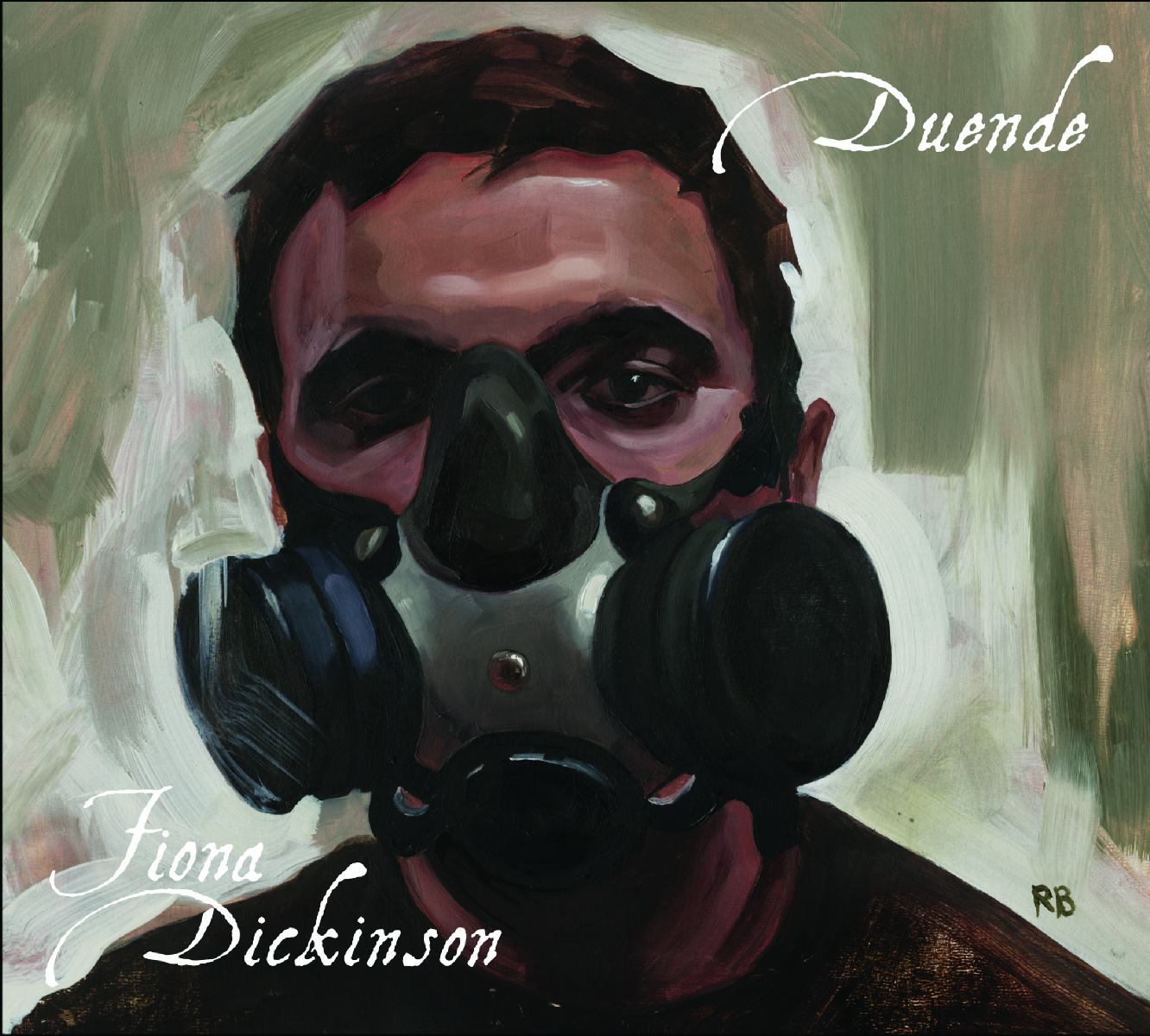
1/14 – Fiona Dickinson ‘Duende’ to be released on Strutt Records

cover art by Ryan Brady


The level of catharsis and convalescence in Fiona Dickinson’s music is astonishing.  You can feel her voice pushing back the demons as she digs deep into a growl, and then angelically welcome in the healing process with the voice of tranquility.  While the subject matter and mood of her songs may carry a wistful and woebegone spirit, this is incredibly warm and inviting sonance that lives and breathes to understand and rebuild once the exorcism is complete.

Her 2011 debut, Duende, set to be released on Strutt Records on Friday, January 14 at (lo and behold!) The Strutt, is a collection of dark folk pieces that pack a riveting emotional punch.  The production, handled by Dickinson and Andy Catlin, wisely places her voice and acoustic guitar at the foreground of a multitude of other sounds, including violin and backing vocals from Samantha Cooper on several cuts and a cornucopia of instrumentation from Dickinson and Catlin throughout, though almost no percussion.  In keeping the majority of the tracks focused on the waves of her guitar/vocal interplay, the creators have ensured that solo performances will not pale in comparison to the record.  Still, the ornamentation provided is quite effective.

We are ushered into the disquieted land with a brief ambient “Intro” that segues into “My Lovely Friend”, a gorgeous number that finds its narrator in dire straits.  A choir of voices provided by a group of Dickinson’s friends adds an extra touch of meltdown intensity.
“Quiet With Others,” a lyrical oddity on the album as there are no self-references, displays the amount of feeling Dickinson can squeeze out of simplicity, using the main chord changes as several different hooks, some vocal, some instrumental, within the same song while not seeming repetitive.  The chorus, where Dickinson and Cooper harmonize the words “He croaked,” is a vocal eruption that is absolutely chilling in its strength.


The unhinged infidelity of “Stone Me” is one of the more stripped down, raw Fiona efforts found on this recording, with Catlin contributing some tasty guitar and organ.  The eerie terror of “Recalling Dreams,” where Dickinson’s voice sounds as if it’s on the verge of collapsing in ominous howling, is followed by the subdued “Sticks” where Samantha Cooper’s violin wraps around Dickinson’s guitar in a haunting interplay of sparse instrumentation.

The lyrical content grows even heavier and direct with the next few cuts.  “The Wall” includes the passage: “I heard a couple making love in the room next door/ The way she moaned reminded me of me a year ago/ When I loved a boy so dearly and we turned our beds into homes/Now that sound had no meaning so I pressed my ear into the wall”.  Highly effective ambient electronics and chaotic stringery on a cello further the frustration and longing innate to the piece.  Perhaps the most primal moment of the album occurs in “Do As I Please” where Dickinson begs “I said to her/ Please don’t do it/ Please don’t do those things to me/ And she said to me/ Yes, I’ll do it/ Yes, I’ll do as I please”.  These lines, authentically distraught, were recorded with Dickinson facing away from the mic, adding an almost-other dimension quality, like a lost soul trying to break through.  Ghostly voices swirling to and fro in the mix along with Catlin’s suspense/thriller piano arpeggios, layer upon layer of violin and cello swelling toward the end, and a shrieking vocal track recorded with Fiona’s head placed in a bathroom sink, put this track into a whole new category.

The mood lightens at this point. “Just Sleep,” a waltz of drunken, socially awkward indulgence, even includes a playful, comforting old-timey bridge. “Winter’s Coming” closes the show in glorious, across-the-plains optimism, even in the necessary departures we
must face in life.

Curiously, the two definitions found for the album title, Duende, are 1. a goblin, demon, spirit  2. charm, magnetism, soul.  Funny how Fiona Dickinson has achieved the latter by fighting off the former.

The entirety of ‘Duende’ can be heard in advance at: http://fionadickinson.bandcamp.com/

To be released Friday, January 14, 2011 at The Strutt in Kalamazoo, Michigan

Fiona Dickinson: Voice, Guitar, Cello, Violin, Bass, Piano, Flute, Bells, Percussion
Andy Catlin: Keyboard, Guitar, Piano, Reed Organ, Clarinet, Percussion
Samantha Cooper: Voice, Violin
Patrick Carroll: Guitar
Choir: Graham A. Parsons, Mike Savina, Patrick Carroll, Gitis Ezekiel Baggs, Adam Danis, Bennett Young and Drew Tyner

All songs written by Fiona Dickinson
Produced by Andy Catlin and Fiona Dickinson
Recorded by Andy Catlin at Strutt Records (Kzoo) and Chain O’ Lakes Campground (Bellaire, MI)
Mixed by Ben Lau, Andy Catlin and Fiona Dickinson
Mastered by Mark Larmee
Layout by John Stiger
Front cover by Ryan Brady ryanbradyillustration.blogspot.com
Struttrecords.com

Problems That Fix Themselves ‘Seconds’ released on Already Dead Tapes

The third release from Kalamazoo/Chicago-based label Already Dead Tapes is ‘Seconds’ from Problems That Fix Themselves, the focus of former Kalamazoo resident and Rotten Wood Moon member Joshua Tabbia, who recently migrated to Chicago.

“Seconds” finds Tabbia (with a little help from Tori Blade and Grow Fangs’ Ray Jackson) exploring a wide palette of sound in the electronic/noise territory, but that double-description unto itself does not do justice to this widely varied release.  The instrumentation ranges from synths, samples, and static to acoustic guitars, something that sounds like accordion and maybe a melodica (if they aren’t organ or keyboard imitation), recurring pieces of an oddly-phrased man doing spoken word and even bits of Conway Twitty songs.  More often than not, there is a beat, groove, pulse or melody to latch onto, maintaining enough hooks amidst the madness to encourage even somewhat-sensitive ears to come back for repeated listens and find more to behold in the less-accessible sections.

The album begins with a peacefully sparse, subdued lullaby sang by Tori Blade entitled “Noelle”, a complete surprise to me upon first listening. It’s a wonderful album opener and, despite the reappearance of Blade’s singing toward the end of the tape and a reprise of the melody to “Noelle,” this is definitely an anomaly on ‘Seconds’. If this opening piece does nestle the listener into the cozy Land of Nod, their slumber shall quickly be disrupted by the jagged edges of sonic shrapnel which follow.

Despite the abrasive tone of much of the sound found on ‘Seconds’, it should be noted that little-to-none of it feels aggressive or, more specifically, violent.  This is FUN noise, colorful and inviting.  Even “Gone,” which ends side one and is a bit eerie, is far from threatening.  Side two opener “Virginia Woolf” contains the random previously-mentioned Twitty bits bookending  the most industrial soundscape found on this release, falling very close to sounding like Nurse With Wound before the electro drum beat kicks in half-way through the piece.  This track can currently be heard at Problems website, http://www.problemsthatfixthemselves.com/

An exciting adventure that only gets better with repeated listens, this release shows a man (with a little help from his friends) on top of his game.